Topaz Dragon Name Generator
Name: Aurembis
Meaning Origin Description Golden Light Latin A dragon whose scales shimmer like polished topaz in sunlight In DraconicKhorvtháargold-lightgem dialectName: Xihuang
Meaning Origin Description Dawn Crystal Chinese Named for the morning sun reflecting through topaz crystals In DraconicKélhshglishdawn-crystalgem dialectName: Solaris
Meaning Origin Description Of the Sun Latin A dragon with scales that capture and amplify sunlight In DraconicKérssungem dialectName: Chrysos
Meaning Origin Description Golden One Greek A majestic dragon with deep golden-amber coloring In DraconicKhórvgoldgem dialectName: Amberlith
Meaning Origin Description Amber Stone Anglo-Saxon Dragon whose scales resemble faceted honey-colored gems In DraconicKersglíshstorsun-crystal-earthgem dialectEach name above is also given in Draconic, the dragon language documented by DragonWatch. Names on this page are rendered in the gem dialect — see how it differs from the other dialects, or look up any root in the field dictionary.

Topaz Dragon Details
| Habitat | Coastal caves and underwater reefs |
| Breath weapon | Cone of dehydrating energy |
| Usual alignment | Neutral |
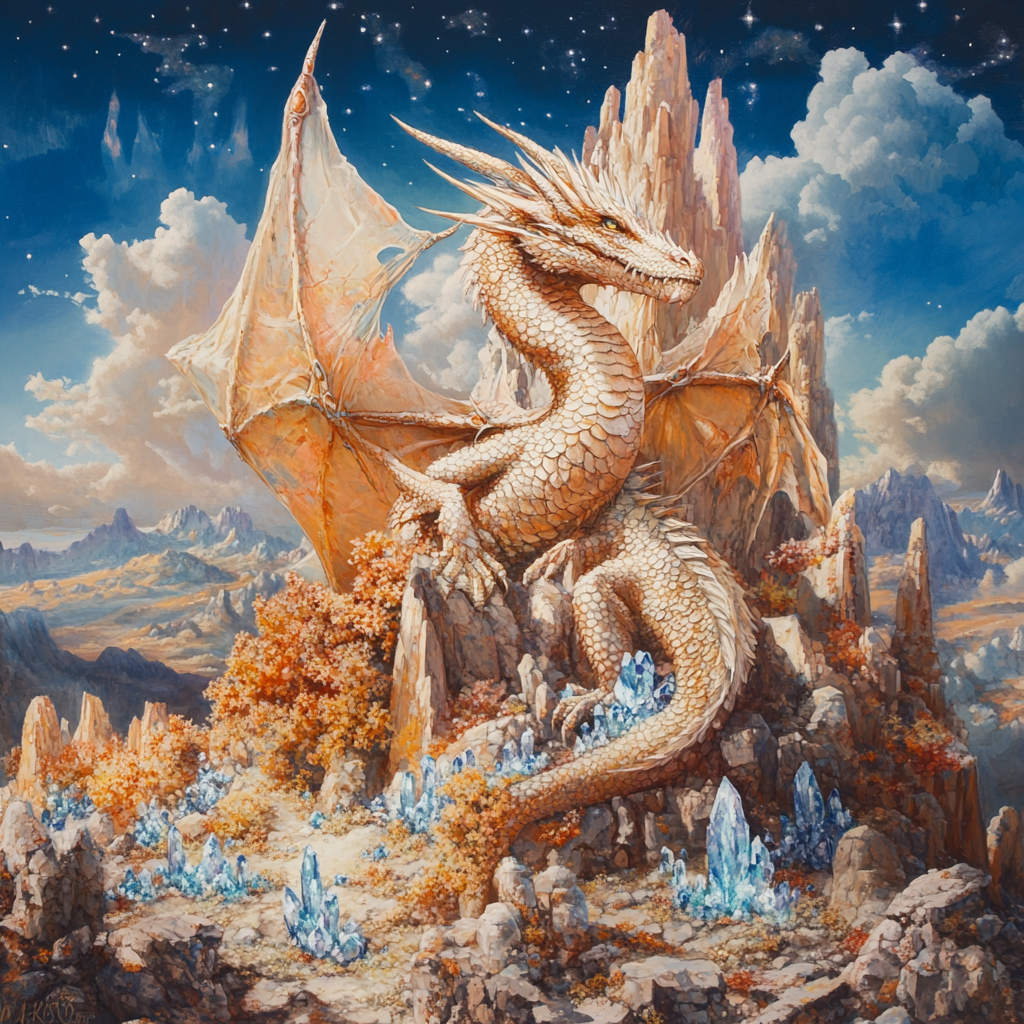
The Topaz Dragon exhibits remarkable adaptability to desert and arid environments, possessing specialized physiological features that enable survival in extreme heat conditions. Their scales display a distinctive crystalline structure, refracting light in patterns reminiscent of their namesake gemstone, with coloration ranging from warm amber to deep golden-brown.
These dragons demonstrate highly territorial behavior within their chosen desert domains, typically establishing lairs in remote rocky outcrops or ancient ruins. Their wingspan averages 40-50 feet in adulthood, with a total body length of 60-70 feet. A unique feature is their specialized nictitating membrane, which protects their eyes from sandstorms while maintaining visual acuity.
The species shows remarkable intelligence and typically maintains a lawful neutral alignment, displaying strong adherence to personal codes while remaining largely indifferent to broader moral concerns. They exhibit sophisticated social structures, often forming loose confederacies with other desert-dwelling creatures.
Notable abilities include:
- Generation of dehydrating breath weapon
- Natural resistance to extreme temperatures
- Enhanced visual perception in bright conditions
- Extraordinary navigational capabilities in desert terrain
Their diet consists primarily of large desert mammals, though they can sustain themselves for extended periods without food. They demonstrate particular fascination with geology and often maintain collections of minerals and gems within their lairs.
Breeding occurs once every century, with clutches of 2-3 eggs requiring specific temperature conditions for successful incubation. Young topaz dragons reach maturity at approximately 100 years, with a total lifespan exceeding 1000 years.
These dragons frequently engage in diplomatic relations with nearby settlements, occasionally serving as guardians or advisors when their interests align. They show particular aptitude for desert-based magic and possess extensive knowledge of their territories' history and geography.
Speak like a Topaz Dragon: Translate your name into Draconic and choose the gem dialect to hear how this dragon would say it, or carve a gem inscription for your table.