Sea Serpent Name Generator
Name: Jörmungandr
Meaning Origin Description World Serpent Norse The mighty serpent that encircles Midgard In DraconicTorskhernslethmany-territory-serpentcore DraconicName: Leviathan
Meaning Origin Description Twisted/Coiled Hebrew Ancient sea monster of biblical origins In DraconicGrakhslethcurse-serpentcore DraconicName: Hydra
Meaning Origin Description Water Serpent Greek Multi-headed sea monster of legend In DraconicShelslethwater-serpentcore DraconicName: Tiamat
Meaning Origin Description Primordial Chaos Babylonian Mother of all sea creatures and chaos incarnate In DraconicThersgresancient-dangercore DraconicName: Ryujin
Meaning Origin Description Dragon God Japanese Divine dragon king of the seas In DraconicKhaththakhdragon-godcore DraconicEach name above is also given in Draconic, the dragon language documented by DragonWatch. Names on this page use the shared core roots that every dragon lineage has in common — see how the chromatic, metallic and gem dialects differ, or look up any root in the field dictionary.
Sea Serpent Details
| Habitat | Deep ocean trenches |
| Breath weapon | Pressurized water jet |
| Usual alignment | Neutral |
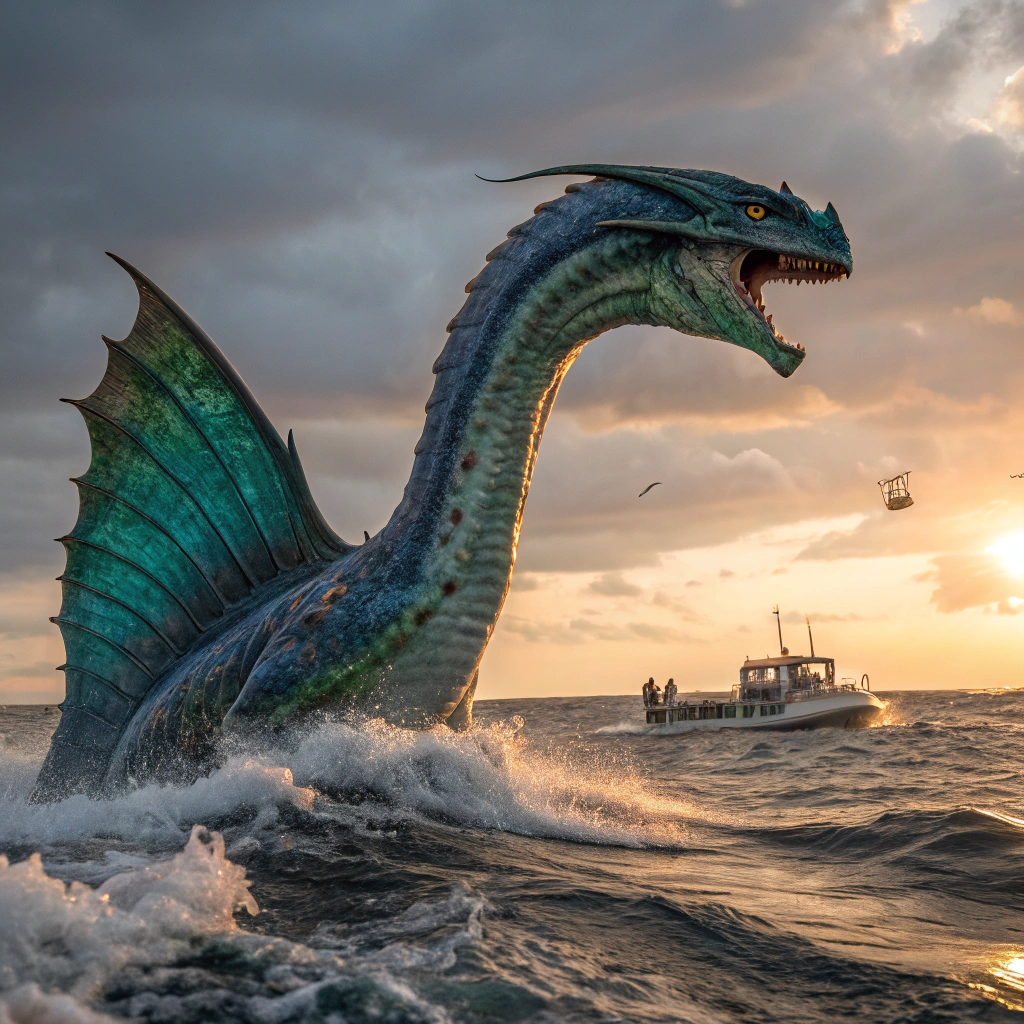
The Sea Serpent (Draconus maritimus) represents a massive aquatic draconic species, typically reaching lengths of 60-100 feet. Their serpentine bodies feature smooth, iridescent scales in varying shades of blue-green, providing excellent camouflage in oceanic environments. Notable anatomical features include fins along their spine, webbed claws, and gills complementing their lungs for underwater respiration.
These creatures inhabit deep oceanic waters, preferring coastal regions where continental shelves drop into deeper waters. They establish territories spanning hundreds of square miles, marking them with distinctive underwater trenches created by their swimming patterns.
Sea Serpents demonstrate remarkable intelligence and possess an innate ability to manipulate water currents. They can generate localized whirlpools and manipulate water pressure to their advantage during hunting or defensive maneuvers. Their diet primarily consists of large marine mammals, schools of fish, and occasionally smaller vessels that enter their territory.
Social behavior indicates a solitary nature, though they may form temporary pairs during mating seasons. They construct elaborate underwater lairs in deep-sea caverns or shipwrecks, often collecting various treasures from sunken vessels.
In terms of disposition, Sea Serpents exhibit neutral to chaotic neutral alignment tendencies. They generally avoid unnecessary conflict but fiercely defend their territory and accumulated wealth. They show particular aggression toward those who pollute their waters or threaten marine ecosystems.
Their behavior patterns suggest a strong territorial instinct combined with curiosity toward surface dwellers, though they rarely initiate hostile contact unless provoked. They display remarkable memory capacity, often remembering and holding grudges against specific ships or sailors who have wronged them.
Research indicates they possess significant longevity, with specimens potentially living for several centuries. Their reproduction cycle occurs once every few decades, with females laying 2-3 eggs in carefully hidden deep-sea nests.
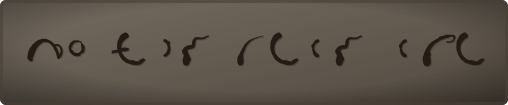
Speak like a Sea Serpent: Translate your name into Draconic and compare how each dialect would say it, or carve a Draconic inscription for your table.