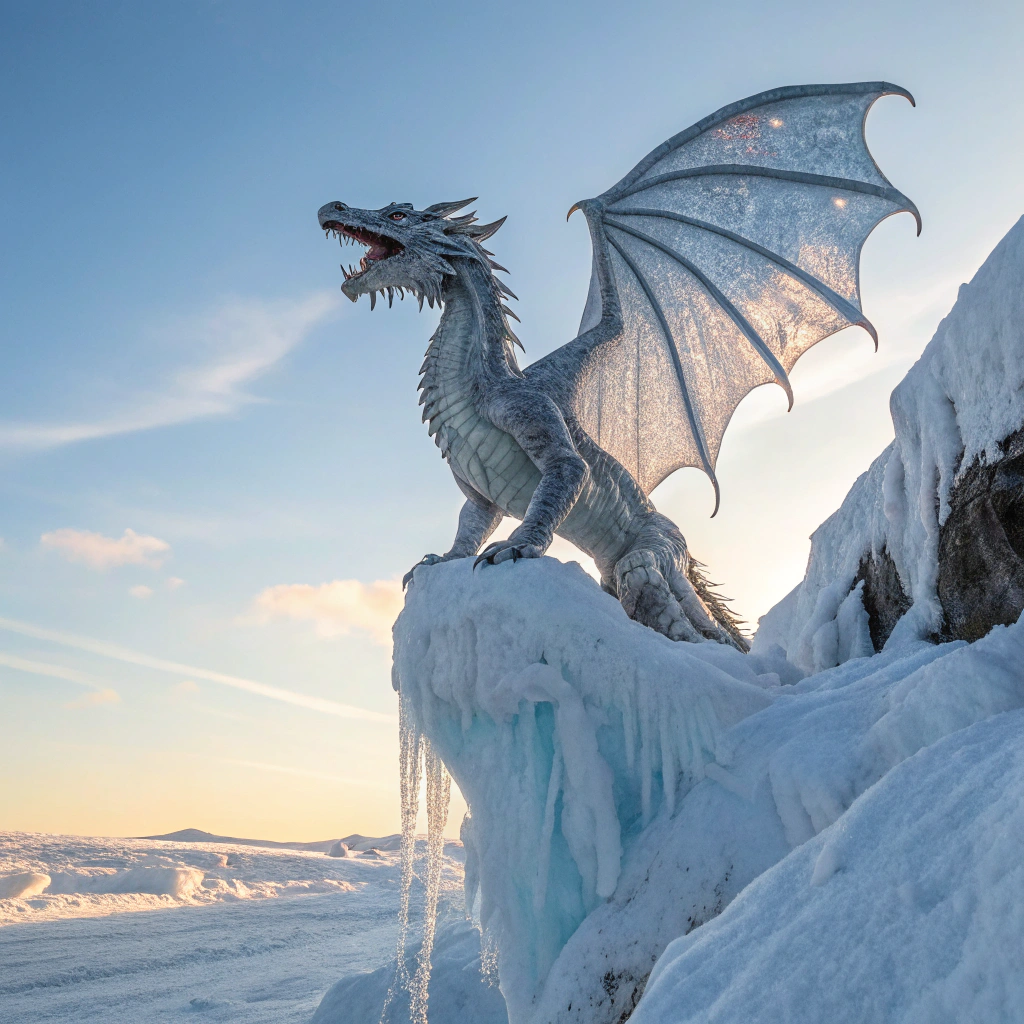
Ice Dragon Name Generator
Name: Glacius
Meaning Origin Description Ice/Frozen Latin Ancient ice dragon known for freezing entire kingdoms In DraconicThasicecore DraconicName: Niflheim
Meaning Origin Description Mist World Norse Wise dragon from the realm of primordial ice In DraconicShelkheshtorskhernwater-air-many-territorycore DraconicName: Cyronia
Meaning Origin Description Cold One Greek Elegant female dragon with crystalline scales In DraconicTheskcoldcore DraconicName: Rimefang
Meaning Origin Description Frost Tooth Anglo-Saxon Fierce warrior dragon with icicle-like fangs In DraconicThastreshice-toothcore DraconicName: Khione
Meaning Origin Description Snow Goddess Greek Majestic dragon named after the goddess of snow In DraconicFoshthakhsnow-godcore DraconicEach name above is also given in Draconic, the dragon language documented by DragonWatch. Names on this page use the shared core roots that every dragon lineage has in common — see how the chromatic, metallic and gem dialects differ, or look up any root in the field dictionary.

Ice Dragon Details
| Habitat | Glacial peaks and frozen wastes |
| Breath weapon | Freezing breath |
| Usual alignment | Neutral |
The Ice Dragon (Draco glacialis) exhibits remarkable adaptations for survival in extreme cold environments, typically dwelling in polar regions, high mountain peaks, and permanently frozen territories. These massive creatures reach lengths of 18-22 meters with wingspans extending up to 25 meters.
Their distinctive physiological features include:
- Specialized scales containing antifreeze proteins
- Multiple layers of insulating tissue beneath their scales
- Enhanced circulation system maintaining core body temperature
- Crystalline structures in their eyes allowing clear vision in snow-blind conditions
- Internal biological mechanisms for generating intense cold
Their breath weapon consists of a highly endothermic reaction, instantly freezing moisture in the air and any organic matter it contacts. This ability stems from specialized glands in their throat that produce liquid nitrogen-like compounds.
Ice Dragons demonstrate territorial behavior but generally maintain solitary lifestyles. They construct elaborate lairs in glaciers or frozen caverns, often spanning multiple chambers with temperatures well below freezing. Their diet primarily consists of large arctic mammals, though they can survive extended periods without food by entering a semi-hibernative state.
Intelligence testing indicates high cognitive function, with particular aptitude for long-term planning and environmental awareness. They display remarkable patience and tactical thinking, often using their environment to advantage during hunting or defensive situations.
Typical behavioral patterns include:
- Dawn and dusk activity periods
- Seasonal migration following optimal temperature zones
- Complex courtship rituals involving aerial displays and ice sculpture creation
- Methodical hunting strategies utilizing terrain features
These dragons typically demonstrate neutral to lawful neutral alignment, showing little interest in moral conflicts but maintaining strict territorial boundaries and behavioral patterns. They prefer isolation and rarely engage with other species unless threatened or their territory is invaded.
Reproduction occurs every 20-30 years, with females laying 2-3 eggs that require specific sub-zero temperatures for proper development. Young ice dragons remain with their parent for approximately 50 years before establishing their own territories.
Their presence significantly impacts local ecosystems, creating permanent cold zones that affect weather patterns and support unique micro-environments of cold-adapted species.
Speak like a Ice Dragon: Translate your name into Draconic and compare how each dialect would say it, or carve a Draconic inscription for your table.