Garnet Dragon Name Generator
Name: Almandine
Meaning Origin Description Deep Red Garnet Mineralogy Named after the rich red variety of garnet In DraconicBrakhdrákhglishred-blood-crystalgem dialectName: Pyrope
Meaning Origin Description Fire-Eyed Greek Refers to the fiery red appearance of this garnet variety In DraconicKhérfiregem dialectName: Rhodolith
Meaning Origin Description Rose Stone Greek Based on the rose-pink garnet variety In DraconicMélhshstorflower-earthgem dialectName: Crimsonwing
Meaning Origin Description Crimson Wings English Dragon with deep red wings like garnet In DraconicBrákhvekhred-winggem dialectName: Rubricatus
Meaning Origin Description Red-Marked Latin One marked with the color of garnets In DraconicRúugyrikeɾasby soundgem dialectEach name above is also given in Draconic, the dragon language documented by DragonWatch. Names on this page are rendered in the gem dialect — see how it differs from the other dialects, or look up any root in the field dictionary.

Garnet Dragon Details
| Habitat | Underground magma flows and crystal formations |
| Breath weapon | Line of magma |
| Usual alignment | Neutral |
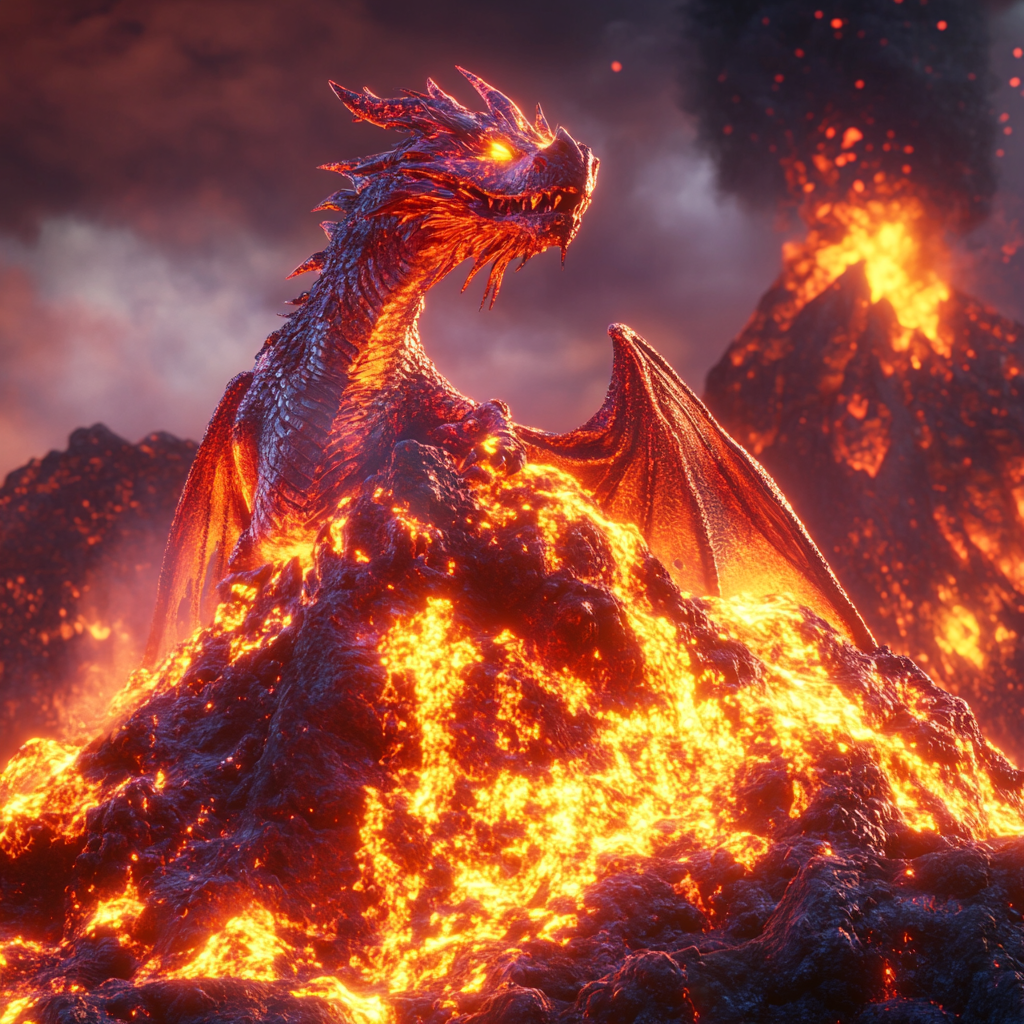
The Garnet Dragon (Draconius granatus) exhibits distinctive crimson-burgundy scales that possess a vitreous luster similar to its namesake gemstone. These creatures typically reach lengths of 40-50 feet at maturity, with females slightly larger than males. Their wingspan averages 45-55 feet, featuring membrane coloration ranging from deep wine to blood red.
Habitat preferences include mountainous regions rich in mineral deposits, particularly areas containing metamorphic rock formations. They demonstrate remarkable geological affinity, often establishing lairs near garnet deposits and other precious stone veins. Their territory typically spans 100-150 square miles, which they patrol regularly.
Physiologically, Garnet Dragons possess highly efficient digestive systems capable of processing mineral matter alongside organic material. Their diet consists primarily of large ungulates, though they supplement this with strategic consumption of mineral-rich rocks, particularly those containing iron and aluminum silicates. This unique dietary adaptation contributes to their distinctive scale composition and coloration.
Notable characteristics include:
- Internal flame temperature: 2800°F (1538°C)
- Enhanced night vision capabilities
- Extraordinarily tough scales (8.5 on Mohs scale)
- Excellent tracking abilities
- Enhanced resistance to earth-based magic
Behaviorally, these dragons display high intelligence and tend toward neutral good alignment, showing particular interest in geological phenomena and mining operations. They often form mutually beneficial relationships with mining communities, offering protection in exchange for mining rights and mineral specimens.
Reproduction occurs every 50-75 years, with clutches typically containing 2-3 eggs. Eggs require gestation in mineral-rich environments for approximately 15 months before hatching. Young achieve flight capability at 6 months and reach maturity at 100 years.
These dragons exhibit strong territorial behavior but are generally diplomatic in their interactions with intelligent species. They are known to negotiate rather than engage in unnecessary conflict, though they defend their hoards with typical draconic ferocity when threatened.
Their natural lifespan typically extends to 2,000-2,500 years, during which they continue to grow and accumulate both knowledge and mineral wealth. Many become informal geological experts, with some even sharing their expertise with academic institutions or mining guilds.
Speak like a Garnet Dragon: Translate your name into Draconic and choose the gem dialect to hear how this dragon would say it, or carve a gem inscription for your table.