European Dragon Name Generator
Name: Adalbert
Meaning Origin Description Noble-bright Germanic A silver-scaled dragon known for its wisdom and diplomatic nature In DraconicVreshlithhonor-brightcore DraconicName: Björn
Meaning Origin Description Bear Norse A robust mountain dragon with thick scales and immense strength In DraconicBraskbeastcore DraconicName: Cynbel
Meaning Origin Description Chief Dragon Welsh An ancient guardian dragon of sacred Celtic sites In DraconicTorkkhathlord-dragoncore DraconicName: Dragoslav
Meaning Origin Description Glory of Dragons Slavic A proud dragon with golden horns and fierce loyalty In DraconicKhathvreshdragon-honorcore DraconicName: Einar
Meaning Origin Description One Who Fights Alone Norse A solitary ice dragon dwelling in frozen peaks In DraconicAinaarby soundcore DraconicEach name above is also given in Draconic, the dragon language documented by DragonWatch. Names on this page use the shared core roots that every dragon lineage has in common — see how the chromatic, metallic and gem dialects differ, or look up any root in the field dictionary.

European Dragon Details
| Habitat | Medieval castles, caves, and mountains |
| Breath weapon | Fire breath |
| Usual alignment | Varies |
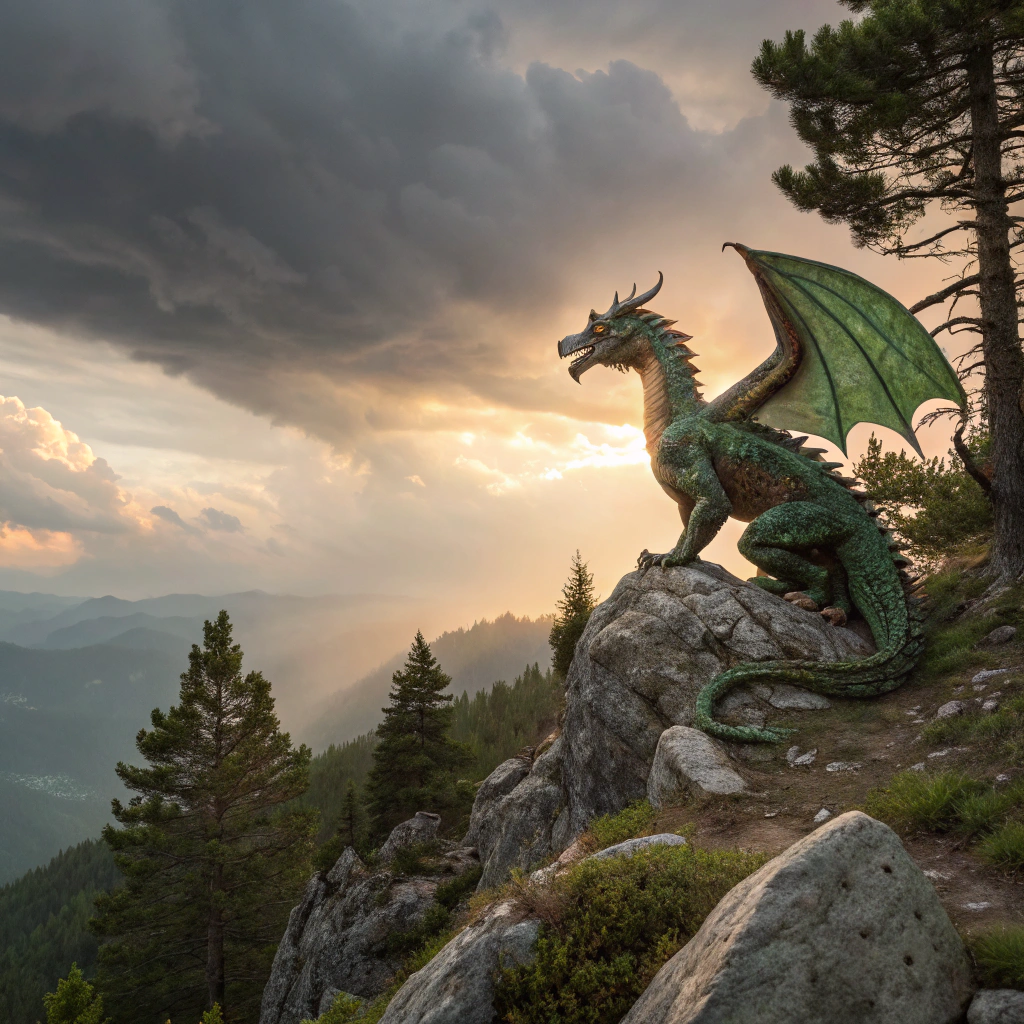
The European Dragon (Draco occidentalis magnus) represents one of the largest apex predators in recorded mythology, typically reaching lengths of 15-20 meters and weighing between 8-12 metric tons. This species possesses distinctive characteristics including leather-like scaled skin, four limbs with sharp talons, expansive wings spanning up to 30 meters, and the ability to expel superheated breath capable of melting stone.
Habitat and Range: These creatures historically inhabited mountainous regions, utilizing large cave systems as lairs. Their territory traditionally encompassed much of medieval Europe, with particular concentration in Germanic and Celtic regions. They showed preference for elevated terrain offering both shelter and vantage points for hunting.
Behavior and Social Structure: European Dragons are primarily solitary creatures, establishing and fiercely defending large territories. They display high intelligence, capable of complex strategy and even human speech in many accounts. Their hunting patterns typically focus on large prey, including livestock and, notably, humans.
Physical Characteristics:
- Scaled armor providing excellent defense against weapons
- Powerful jaw structure with multiple rows of serrated teeth
- Enhanced visual acuity, including possible infrared sensing capabilities
- Four-chambered heart supporting both flight and fire-breathing capabilities
- Internal flame-producing organ system
Typical Alignment and Temperament: These creatures generally exhibit lawful evil to neutral evil alignments, displaying territorial aggression and materialistic tendencies. They show high intelligence and cunning, often accumulating wealth and engaging in complex negotiations or manipulation of lesser beings.
Diet and Hunting: Carnivorous, requiring substantial caloric intake to maintain their massive size and energy output. Primary hunting methods include aerial attacks and ambush tactics, often utilizing their fire-breathing capability to incapacitate prey.
Notable Adaptations:
- Fire-resistant scales and internal organs
- Advanced flight capabilities despite massive size
- Enhanced longevity, with specimens reportedly living several centuries
- Highly developed cognitive abilities allowing for complex strategy and reasoning
Speak like a European Dragon: Translate your name into Draconic and compare how each dialect would say it, or carve a Draconic inscription for your table.